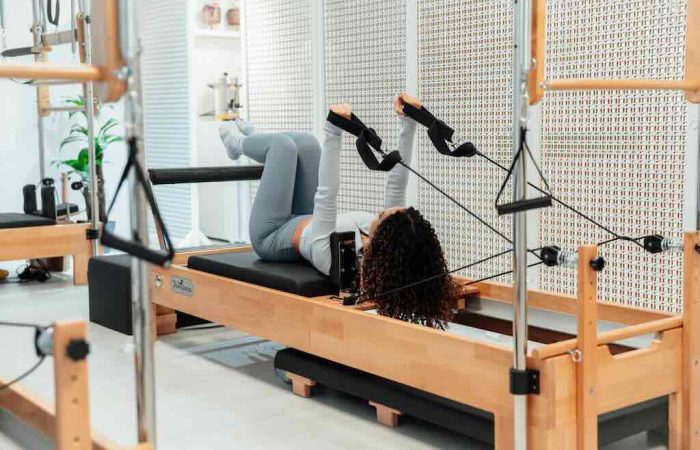
Pilates is all about consistent improvement leading to long-term gains. It is a low impact activity, though the slow controlled movements are still demanding. Pilates is not something where you will be asked to push boundaries, break through the pain barrier or exercise until you drop. Instead it is about steady sustainable improvement.
Everyday Life
Joseph Pilates was certainly an advocate of consistent long-term training. He famously said: “You will feel better in ten sessions, look better in 20 sessions and have a completely new body in 30 sessions.” He originally called his system Contrology, but what is now known simply as Pilates will help to improve your flexibility, posture and balance. Pilates wanted us to take the movements into our everyday life so that we move more confidently and are aware of say how we sit on the tube or our posture at a desk.
Reformer and mat Pilates concentrate on all the muscle groups, working against resistance to provide a steady improvement, particularly in the core muscles. Consistency matters more than intensity and regular sessions are better than occasional high-intensity bursts. The fitness world often emphasises extremes and instant transformations, but these high-intensity workouts can cause burnout and injuries.
Slowly and Consistently
In contrast Pilates is low-impact and calming, it builds strength slowly and consistently. It chooses quality over quantity in guided sessions with the Reformer able to be adjusted to suit each client. The aim is not a quick fix but to think about breath, alignment and posture so that it becomes a cornerstone of daily life.
One often forgotten benefit of Pilates is that it can help you to sleep better. Sleep is sometimes said to be the best health hack there is. There’s certainly a different more satisfying tiredness after time spent exercising compared to the weariness that comes after sitting hunched over a desk all day. Pilates will help to release muscle tension and increase your sense of relaxation giving better quality sleep. Regular exercise can help reduce the number of times you wake up in the night.
Focus on Breathing
The controlled breathing of Pilates, concentrating on inhaling and exhaling, should help to reduce levels of cortisol, the stress hormone. Being in the moment as you concentrate on Reformer or mat exercises will help you forget about everyday worries and reduce stress. The focus on breathing in class might also help sleep-related breathing and will benefit those who suffer from broken sleep or insomnia.
Anyone who has ever suffered from an aching back will know it can keep you awake at night. Another benefit of Pilates is that it will help alleviate back pain and therefore improve sleep. With a strengthened core and any misalignments corrected the body will be in a better state to relax and sleep. Greater awareness about your body will also help you develop healthy sleep hygiene routines.
With consistent practice Pilates can improve both your body and quality of life. Pilates is a sustainable set of exercises aiming to help the user for a whole lifetime. It is very much about making a cumulative lifestyle change rather than a quick fix, so enjoy the journey to health and wellness.
If you would like our newsletter you can subscribe on the Home page. Follow us on social media:
Facebook | Instagram | X | Linkedin.
The Pilates Central Team