Welcome to the October edition of Pilates Central News.
In this edition:
- Breathing techniques in Pilates
- Riotous Pilates
- Man at work
- Paws for thought
Breathing techniques in Pilates
Joseph Pilates once said: “Breathing is the first act of life and the last. Our very life depends on it.” Breath is one of the six key principles of Pilates, alongside concentration, centering, control, precision, and flow.
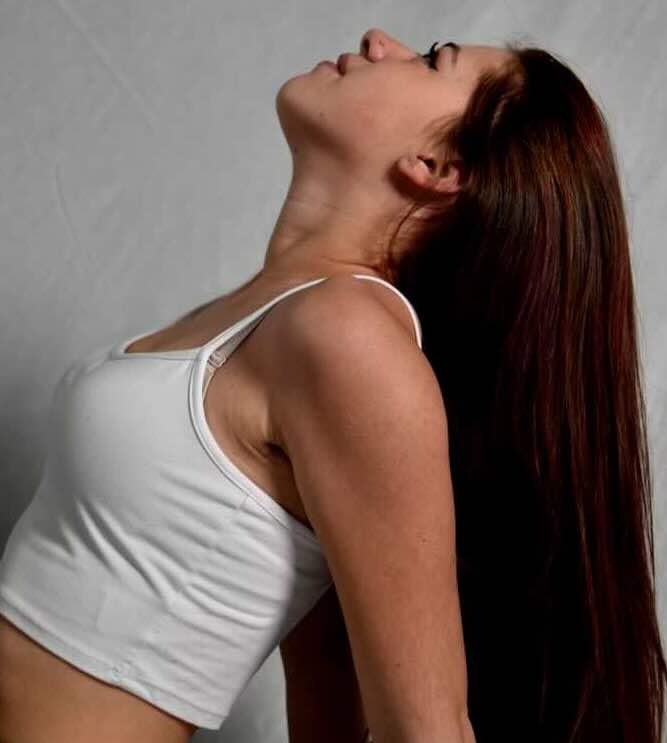
In his book Return To Life Through Contrology Pilates advocated, “long deep breaths to expand the upper chest to capacity while drawing the abdomen in, holding the breath for a short time, then exhaling and always trying very hard to ‘squeeze’ every atom of air from the lungs.” Pilates had asthma as a child so was very aware of the importance of breathing. He felt that getting all the air out of your lungs was a way of improving blood flow and re-energising the body.
There is a lot to take in when you first start Pilates, but with time teachers will help you concentrate on and be more aware of your breathing. Lateral breathing is about not relying on shallow chest-breathing, but instead as you breathe allowing the ribs to expand into your back and sides while pulling your abdominals in.
With normal breathing the stomach tends to expand on inhalation and contract on exhalation. You can feel this by lying down and placing your hands on your stomach or even placing something like a bag of rice on your stomach to note the movement. This can be known as “belly breathing” or “belly puffing”. This type of breath can reduce stability during movement.
The aim of Pilates lateral breathing is to work your core and for your breath to expand and contract sideways through the torso, exercising not just the abs but the oblique muscles as well. You should feel the inhale through your entire ribcage. The basic technique is to inhale through the nose and exhale through the mouth while blowing out gently, all the time keeping abdominal muscles engaged. On exhaling your ribs will move towards your hips, closing rather like a corset.
Your breaths don’t have to be loud, just try to maintain a steady flow instead. Typically you inhale during the lengthening phase of an exercise and exhale during contraction. Your shoulders should be relaxed and down, not rising on the inhale and try to breath through pursed lips.
Breathing well will help with spinal mobility and general movement. It will also release tension and make the exercises feel more achievable. Common breathing mistakes include breathing only into the chest, over-bracing and holding your breath while exercising, which can be tempting during exertion.
However, no one rule applies to every Pilates exercise. Breathing in Pilates is about more than just breathing in and out at certain times. Your breath can be adapted to each exercise. Doing restorative work might involve more relaxed breathing, but doing an exercise like the hundred will require a more controlled breath pattern. Some exercises can use specialized rhythmic breathing patterns.
Concentrating on something you normally do without can seem daunting. But thinking about how you use those breaths can ahelp promote stable movement and improve the mind-body connection. As Joseph Pilates once said, “above all learn how to breathe correctly.”
Riotous Pilates
Rosalie Craig, most recently on our screens as vocalist Kitty in Sally Wainwright’s BBC series Riot Women, is the latest actor to extol the merits of Pilates. Rosalie is a regular at Power Pilates in Beckenham and recently took to Instagram to say how much she loves Pilates.
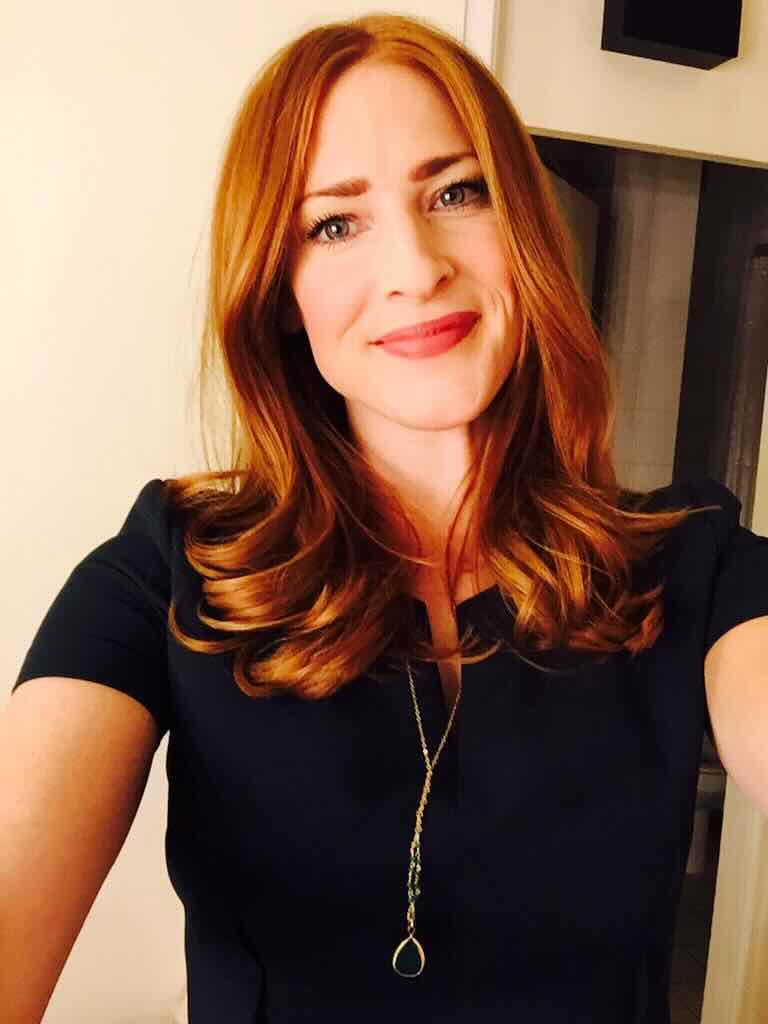
Sitting on a Reformer, Craig says: “I really hate it when I can’t come to Pilates if I’m off filming… The difference it has made not only to my strength, but to wellbeing and my confidence is huge. I love coming here. You get a real sense of community and you belong somewhere and every trainer is completely different.”
The actor has also found Pilates useful preparation for demanding musical theatre roles, including The Light Princess, London Road and The Threepenny Opera at the National Theatre. Rosalie is clearly a bit more health-conscious than her vodka-drinking, car-smashing and all round volatile character of Kitty in Riot Women.
Craig ends her Instagram post by saying: “You get really strong and flexible without even noticing it’s happening. For women of a certain age and younger women too it’s such a challenge, but in a safe environment. You might look at somebody else across the room and they inspire you to lift a heavier weight or hold something a bit longer than you would. It’s self-confidence, self-worth, the benefits, you just feel better. Honestly, I don’t know what I’d do without this place.”
Man at work
“‘My body is on fire!’: My perilous, painful, perfect month of Pilates,” is the headline for the Guardian’s two-page feature on men trying Pilates. The paper’s Sammy Gecsoyler was tasked with becoming a “Pilates prince” over four weeks and seems to have enjoyed the experience, having begun it with back and shoulder pain.
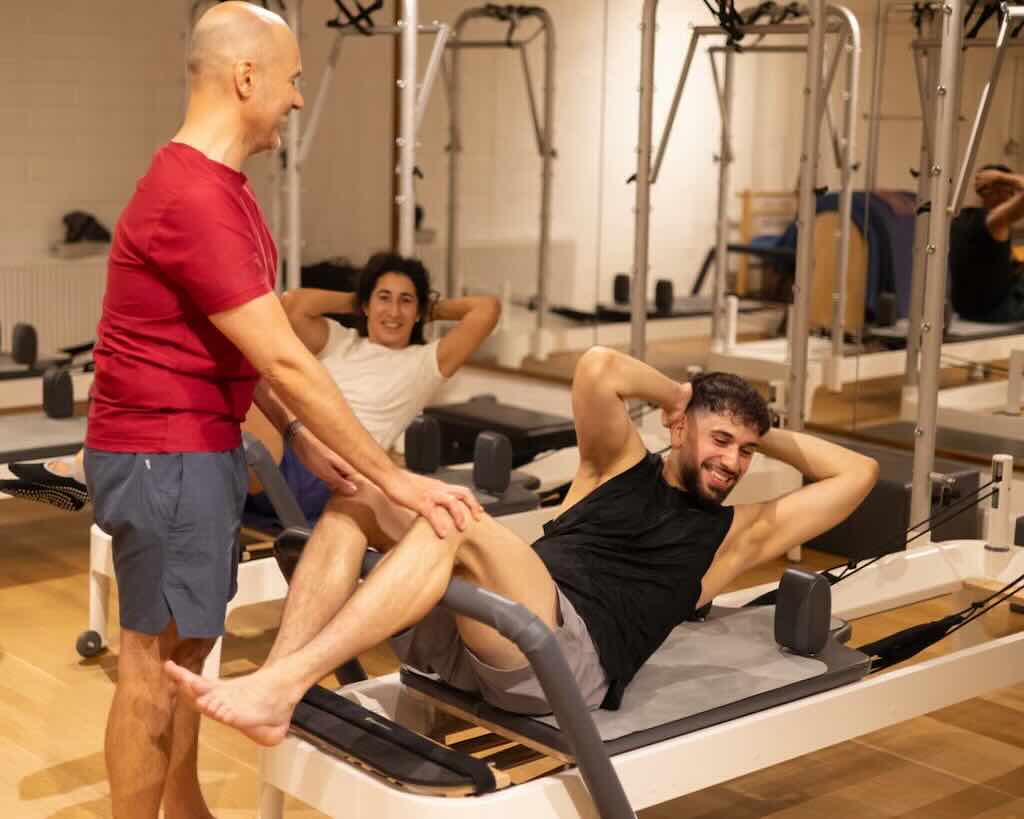
In week one of a Reformer class he feels exhausted after a 40-minute session and struggles with exercises like the hundred and leg circles. Week two is still exhausting, “but every movement feels like it’s hitting the right place” and his shoulder pain starts to ease. Week three sees him try a mat class where he discovers, “the two variants of Pilates feel distinct. Reformer is great for feeling flexible, but mat feels like a true test of my abilities. I enjoy the challenge and I can see myself doing both in the future.” For week four he is back on the Reformer and starting, “to feel at one with the machine,” and coping much better with doing the hundred.
After a month of Pilates Gecsoyler concludes: “My stomach certainly feels firmer. I can also bend down and touch my toes with good balance: an untied shoelace will take me down no longer. Doing the splits is a long way off but my morning stretches feel more elongated and my posture is slightly improved, though my spine is hardly ruler-straight. And what about my shoulder? I didn’t expect Pilates to be a magic bullet, but there’s less pain.”
Overall, Sammy is impressed enough to be contemplating weekly classes. Not bad for a man who started out saying, “My core strength was nonexistent, as was my flexibility.”
Paws for thought
“How our Pawlates journey started…” reads the caption on the viral video of senior dog Weasel doing Pilates. The dog’s owner Jillian Loustaunau runs the Movemint Pilates studio on the island of Oahu in Hawaii. She noticed that with age Weasel, a 15-year-old golden retriever, was losing mobility and the use of his hind legs. So she put him on a Pilates programme for the summer and posted the results on Instagram.
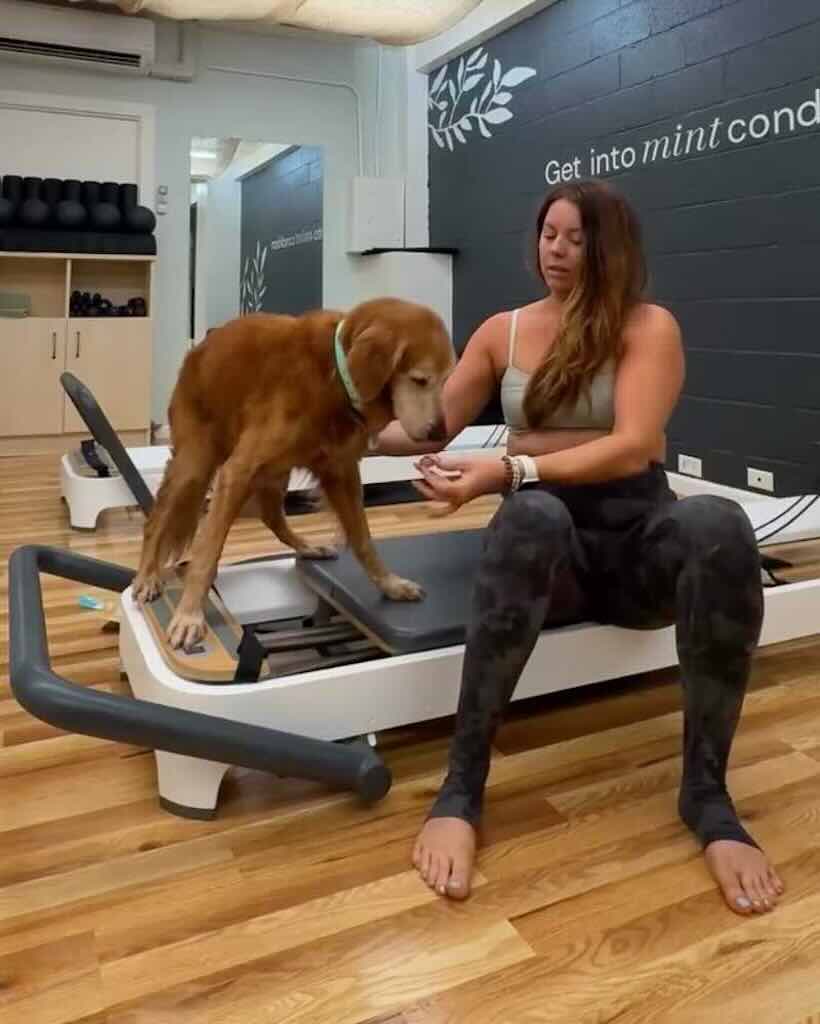
Weasel is shown stretching his spine and decompressing his joints on a ladder barrel, helped along by the occasional dog treat. Jillian writes: “It was a bonus to include so much strengthening work that day, as holding his hind legs long and climbing uphill had been major challenges for him—but not this time.”
Using more bits of equipment than you could shake a tail at, Weasel does dog planks when Jillian moves the ladder barrel next to the Cadillac. He is also shown stretching on a Reformer, stepping on to a balance disc, climbing Pilates boxes, and using a Wunda chair to increase his mobility.
Jillian explains: “I was reminded of learning how Joseph Pilates studied cats in developing contrology and had this lightbulb moment that Pilates could probably translate to dogs too… I’m still in awe of how much he enjoys using these machines and how much they are actually helping him. Through daily practice, Weasel has regained almost of his functionality and is making more progress each week.”
The treatment has been o successful that Jillian’s studio is now offering online “Pawlates” course as proof that you can teach an old dog new tricks.
If you would like our newsletter you can subscribe on the Home page. Follow us on social media:
Facebook | Instagram | X | Linkedin.
The Pilates Central Team