Welcome to the September edition of Pilates Central News.
In this edition:
- Why many people stay with Pilates for life
- Political Pilates
- Flight plan
- Whole new ball game
Why Many People Stay With Pilates for Life
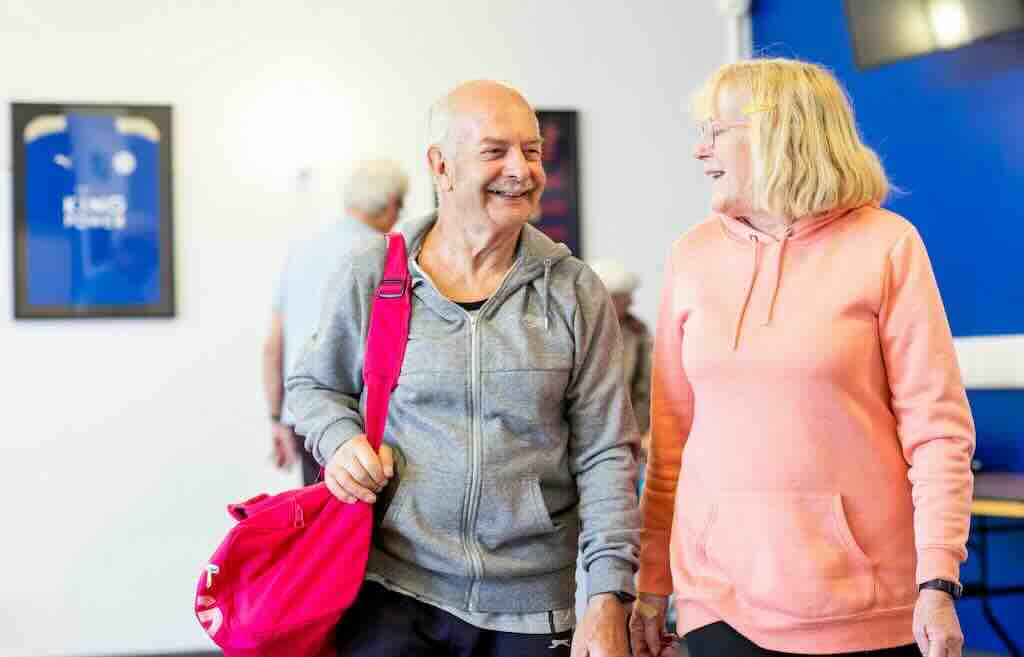
Pilates is something users tend to stay with for decades. The great advantage of Pilates is that it can be adapted to every stage of your life. It can be used by young people at the peak of their fitness but also for rehabilitation after injury, coping with and recovering from pregnancy, treating bad backs and poor posture as we age, maintaining bone density and remaining flexible and reducing the risks of falling in later life.
Most sports have a cut-off point. Footballers retire in their thirties as do the players of high-impact sports like rugby or American football. Amateur five-a-side players, tennis players and cricketers might last into their forties, joggers and long-distance runners go on for longer, but there comes a time when the aches and pains of high-intensity sport become too much. Bad backs, joint pains and muscle strains or injuries are a particular bugbear of the active but ageing athlete.
But Pilates is different to the gym, a series of low intensity but demanding exercises that can be adjusted to suit the user throughout their life. It is about building core strength through control and concentrates on smaller often neglected muscle groups as well as the more obvious ones. It should result in long-term gains rather than a quick fix with problems returning later. Working against resistance on the mat or Reformer, Pilates will provide steady improvement. Whereas over time, high-impact exercise routines can take a big toll on ankles, knees and spinal discs.
Users stay with Pilates because it changes their relationship with their body. Misalignments are corrected, posture improved, and users find themselves standing taller and thinking about the way they move not just in the studio but in their everyday lives. Instead of slouching over a desk, you will be applying thought to the way you sit and move. A famous quote from Joseph Pilates states: “You will feel better in ten sessions, look better in twenty sessions and have a completely new body in thirty sessions.”
Rather than just treating, say, a bad back, with time Pilates will improve the stabilising muscles of the abdomen, lower back and pelvic floor and help to prevent future mishaps. Regular work is a great insurance policy against all kinds of ailments as we get older.
There are mental benefits to doing Pilates whatever your age. Concentrating on breathing and mindful movement can reduce stress and become a kind of moving meditation. Joseph Pilates said that his system was, “the complete coordination of body, mind and spirit.” Some might call this cognitive focus, others think of it as something more spiritual. You will be in the moment concentrating on your breathing and movement rather than stressing about everyday worries.
Pilates is infinitely adaptable. As well as the Reformer and mat exercises, the Wunda chair and the Cadillac can be used for exercises. Pilates balls, bands and rings can also be added to your routine. It can be as difficult or easy as required and change as your body does. Once people try Pilates, they tend to get hooked, and with good reason. Not many exercises can provide so many benefits throughout your life.
Political Pilates
What do former Prime Ministers do to stay fit? Pilates of course. Gordon Brown explained to the Guardian’s Charlotte Edwardes how he stays fit at 75. He revealed: “You’ve got to try harder to stay fit… Lots of walking, a bit of treadmill, a bit of these machines.” When pressed about the said machines, “He admits his wife Sarah bought a Pilates Reformer years ago which ‘maybe’ he uses, too. How often? ‘Four days a week’.”
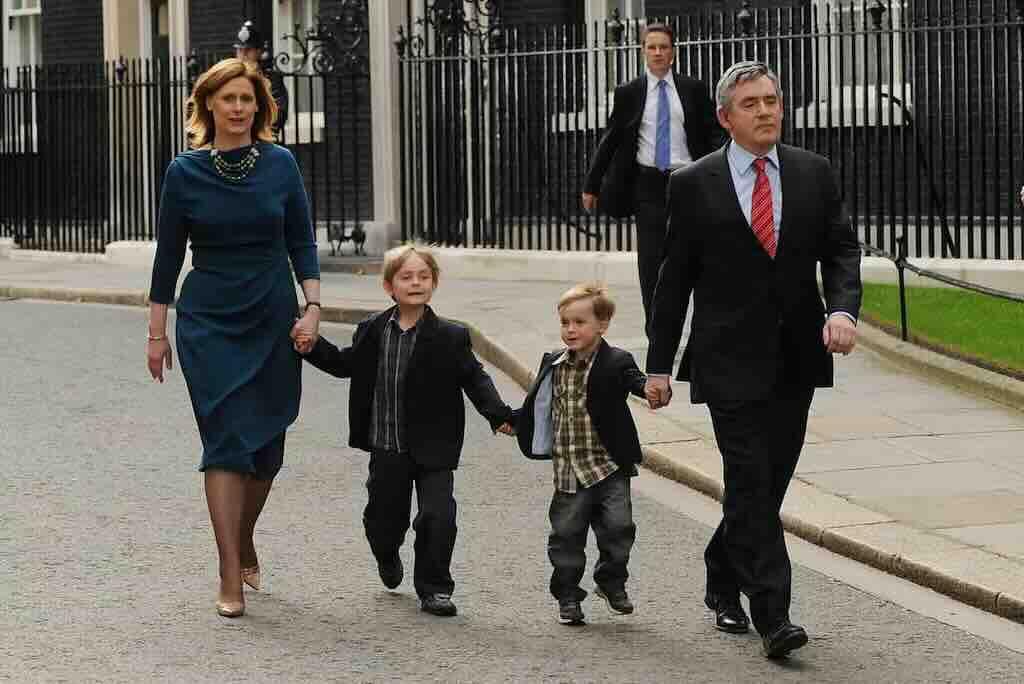
Brown has previously dabbled in Pilates, creating national headlines in August 2008 when he took up Pilates on holiday with personal fitness instructor Millie Dobie. She had been recommended to him as a means of coping with the strains of office by film director Richard Curtis and his wife, the PR guru Emma Freud. Dobie took Brown through relaxing Pilates sessions before breakfast followed by 30-minute workouts in the afternoon. The Daily Telegraph reported this with the headline, “Gordon Brown has taken up Pilates as he limbers up to take on any prospective challengers to his leadership.”
Pilates has certainly proved beneficial for the former PM who says, “Look, I’m still working as hard as I did 20 years ago. I don’t think I’ve let up.” He is still contributing to political debate and has just published a new book, The Future Starts With Us.
Clearly Pilates is a Labour of love for Brown. We can’t confirm if he has a teacher called Prudence, but as a former “Iron Chancellor” it is perhaps understandable if Gordon wants to become more flexible.
Flight plan
Most of us will know that cramped, uncomfortable feeling after sitting on a flight for hours. Well, Condé Nast Traveller has come up with a feature headlined, “The Simple Exercises We Should all be Doing on a Long-Haul Flight, According to Pilates Instructors.”

To counter a stiff back and sore neck the piece advocates several Pilates exercises that can be performed while sitting in a plane seat. “You feel the effects of a long-haul flight far more in your body as a passenger than you do as a crew member. One of the biggest differences is simply movement,” says Pilates instructor Lisa Sayers, a former cabin crew member turned Pilates teacher.
The piece recommends deep diaphragmatic breathing to, “maintain oxygen flow, reduce muscle tension, and keep your nervous system calm.” Next up is the simple shoulder roll, to help release tension in your shoulders and upper back. Pelvic tilts are another suggestion, to help you find your healthy neutral sitting position. Seated knee lifts with ankle movement are good as a passenger lifting their knees while in their seat can improve blood circulation and activate hip flexors and the core.
Spinal rotations and toe taps can be done even with a seat belt on. The piece also recommends an isometric palm press to, “engage your core and release tension in your shoulders.” But perhaps be careful when holding your hands in the prayer position, just in case you alarm other flyers. Passengers won’t be able to perform a full Pilates routine in the aisle of course, but these simple exercises should help plane-users arrive at their destination feeling relatively refreshed. Here’s to mile-high Pilates.
Whole new ball game
“Graham Potter makes thinly-veiled dig at Chelsea and West Ham after fan mocks his Pilates exercise,” reads an excited headline in the Daily Mail. You wouldn’t think a Pilates session could spark a football row. But that’s what happened to Graham Potter, now manager of Sweden’s international side. The former Brighton, Chelsea and West Ham manager is married to Pilates teacher Rachel Potter, who runs a studio in Brighton. He recently posted an Instagram picture of himself doing Pilates captioned, “Pilates session update! I have a lot of work to do!”
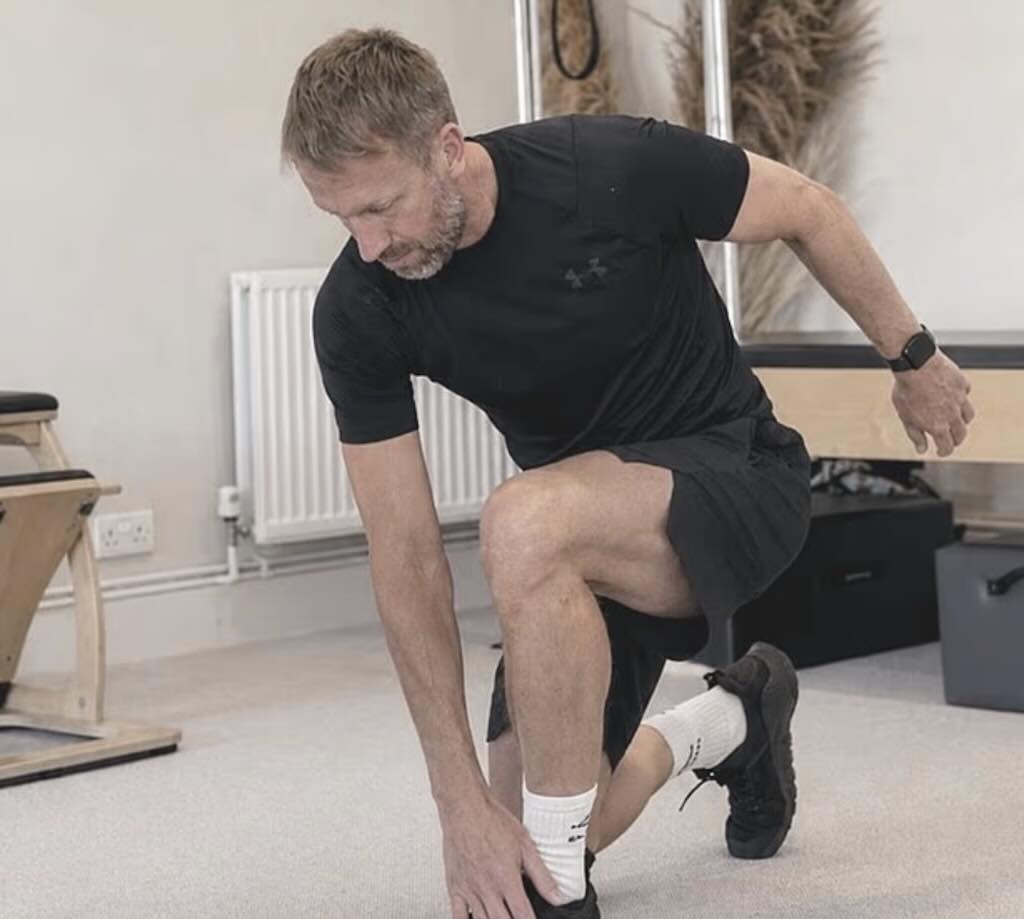
In the comments section a fan responded with the jibe: “Hopefully you are better at Pilates than you are a football manager.” Potter responded: “I’ll try not to do Pilates in a dysfunctional place and I will be okay.” This appeared to be a dig at his former clubs Chelsea and West Ham, where he was sacked after relatively short spells in charge.
In response to a follow-up comment by a West Ham fan, Potter replied: “Easy tiger. I never mentioned West Ham or any club.” After he was told to “ignore the haters” in another comment Potter then wrote: “Of course I am responsible for my part but unfortunately lots happen at football clubs to determine success or failure not just one man!”
There can’t be many Pilates sessions that have inspired a debate about football management, but if Graham wants to do Pilates in a functional environment, then he is always welcome at Pilates Central.
If you would like our newsletter you can subscribe on the Home page. Follow us on social media:
Facebook | Instagram | X | Linkedin.
The Pilates Central Team